
10 Picks for Women in Translation Month 2026
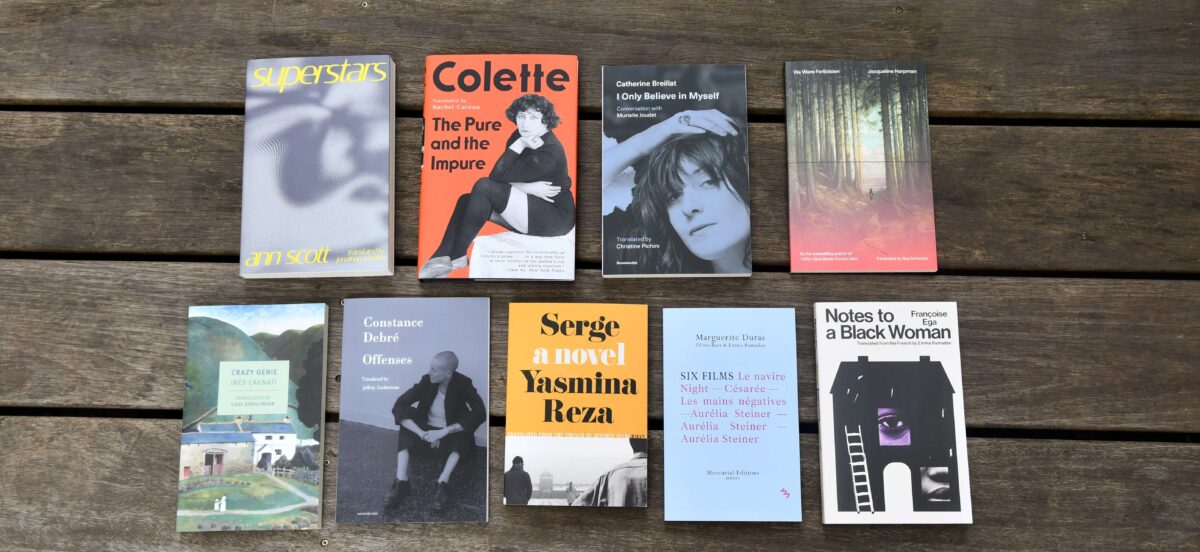
Women in Translation Month, celebrated in August of each year since 2014, is an opportunity to spotlight women writers from around the world, writing in languages other than English. Albertine Books could not exist without the incredible collaborations between authors, translators, and publishers that come together to bring French-language literature into English. We have put together a reading list of some of the standout English releases of women in translation over the past year.
There is a book on this list for every reader, from a new translation of a well-loved classic from Colette, to the latest publications from some of the most exciting voices in contemporary Francophone literature like attorney-turned-autofictionist Constance Debré, adept psychological portraitist Yasmina Reza, and captivating historical fiction writer Gaëlle Bélem.
Notably there are several works of 20th-century literature on this list which have attracted a renewed interest among the Anglosphere — an equal parts devastating and beautiful rural novel by Inès Cagnati, a collection of fantastical allegorical fictions of Jacqueline Harpman, and an influential work of sociological testimony of Françoise Ega.
And for lovers of experimental forms, don’t miss the cult-classic Y2K lesbian rave novel from Ann Scott and newly-translated writing from filmmakers Marguerite Duras and Catherine Breillat.
Browse our selection below. Orders can be placed on our website or by calling Albertine Books at 332.228.2238.
Reading List
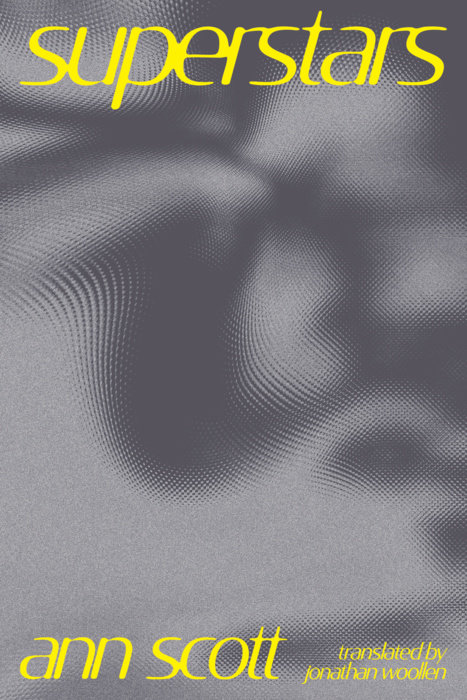
Louise is a woman in her early thirties with a record contract, colorful roommates, and a passionate, volatile relationship with the lesbian community around her. She used to be part of the French rock scene, having dated and collaborated with a man named Nikki who was a crucial figure in that milieu. But she has been out of that world for years, having switched from rock to rave culture and, concurrently, having started to date chiefly women. Her longest and most combative relationship in this scene has been with Alex, another woman who has established herself as a DJ and has recently started seeing a much younger woman named Inès.
One day, Louise receives a life-changing advance from a record label to produce her own electronic music. She struggles to handle the responsibility of professionalizing her lifestyle, one suffused with the omnidirectional drama of the women in her circle, and with her own equivocations about her role in it. They bar-crawl, watch MTV, go to each other’s sets, hook up, and do copious drugs.
Tension builds as Louise finds herself pulled toward multiple possible paths: forward in her career in the techno world; backward toward rock’n’roll, Nikki, and the life he represents; toward Alex again; and toward Inès, leading to a dangerous and ultimately devastating affair. Ann Scott portrays the Paris underground in all its beauty, ugliness, and pulpy grandeur, with the caustic voice of a born punk struggling to conform to the standards of a new, hungry world of anticonformists.
Superstars by Ann Scott, translated by Jonathan Woolen, was published by Astra.
Click here to order this book through Albertine.
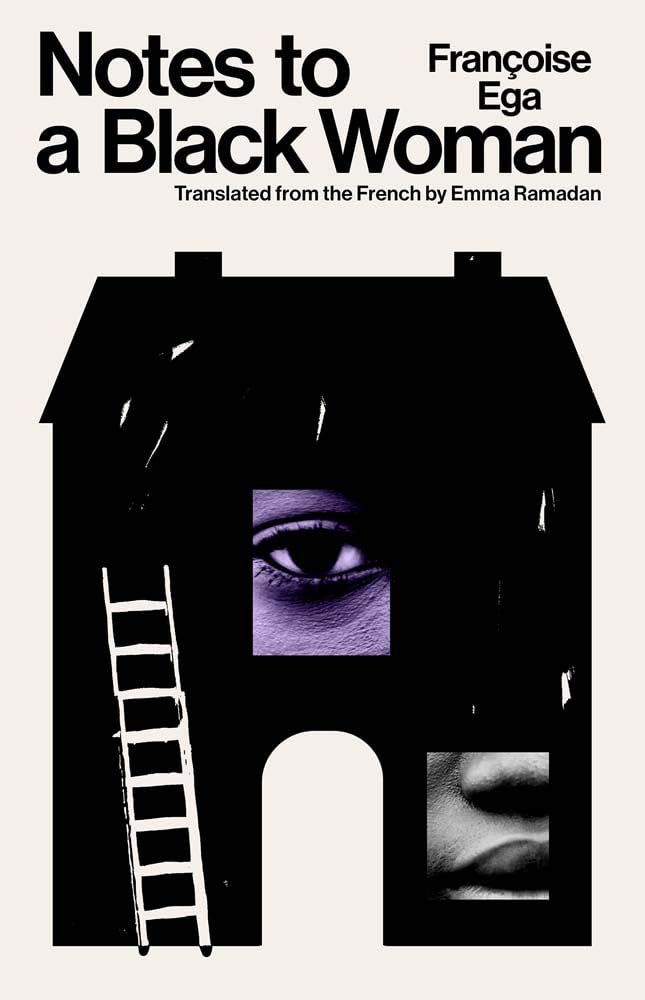
In the 1960s, hundreds of women traveled from French colonies in the West Indies to become domestic workers for white families in France. Lured by the French government with the false promise of economic opportunity, these women instead found themselves subjected to racial discrimination, deplorable living conditions, overwork, and no pay until they “earned back” the cost of the trip to France.
After hearing the shocking stories of Caribbean domestic workers, Françoise Ega took a position as a cleaning woman in wealthy French homes in order to chronicle these abuses. Structured as a collection of unsent letters to the Brazilian writer Carolina Maria de Jesus, Notes to a Black Woman weaves the story of Ega’s experiences in France with her memories of Martinique, her observations on the joys and tribulations of family life, and her reflections on the power of the written word to reveal the discomfiting truths behind the facade of bourgeois French society.
Composed on her bus commutes and by candlelight at her kitchen table while her five children slept, Notes to a Black Woman is a piercing denunciation of the legacies of colonialism and slavery, a wholesale rejection of alienation, and an intimate archive of friendship, joy, solidarity, motherhood, and hope.
Notes to a Black Woman by Françoise Ega, translated by Emma Ramadan, was published by Yale University Press.
Click here to order this book through Albertine.
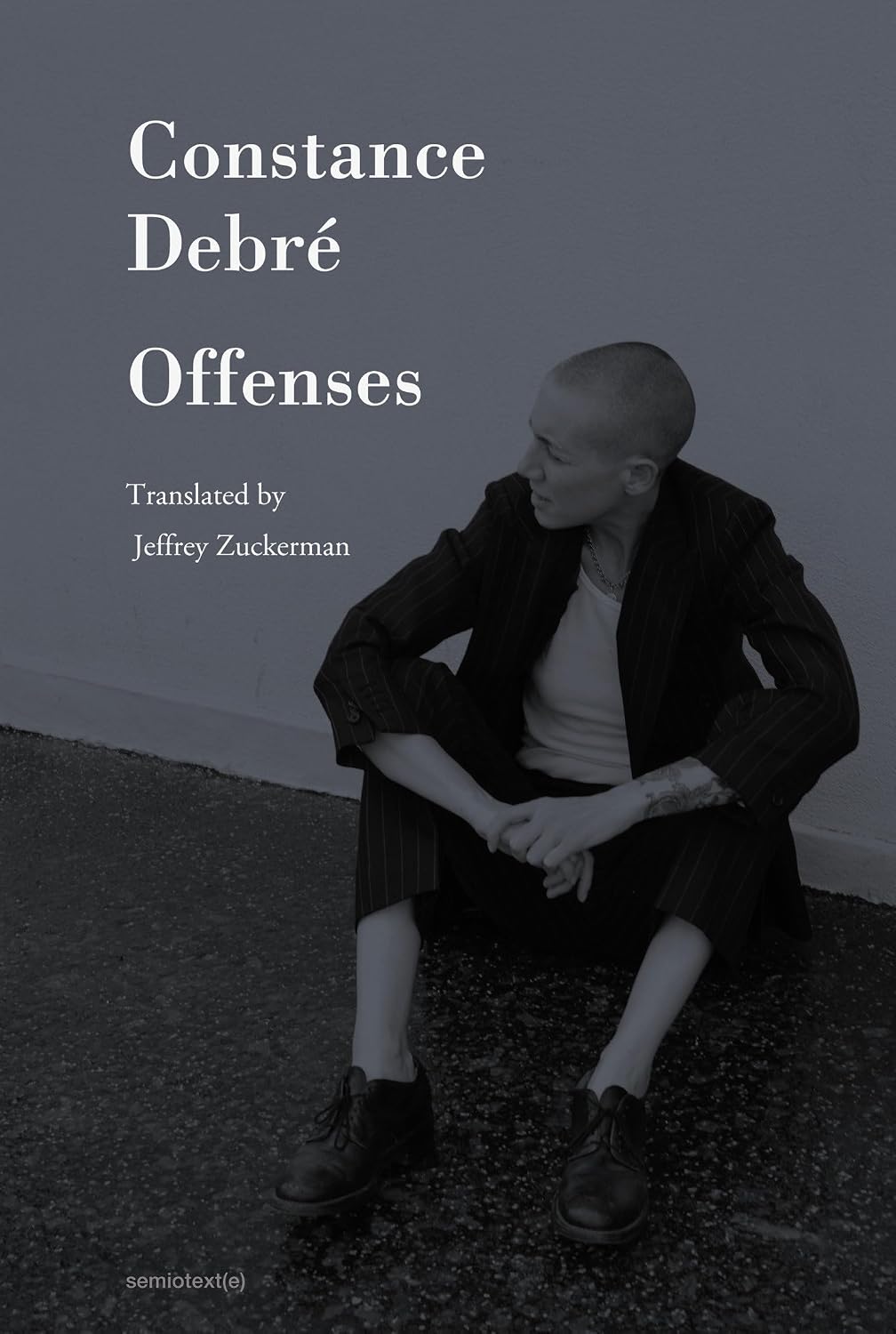
Since publishing her first novel in 2018, Constance Debré’s work has exposed the flaws in the social order with dizzying passion and intelligence.
In Offenses, Debré trains her sights on a single case of inevitably flawed justice that, like hundreds of others like it, reveals the enmeshed culpabilities of the perpetrator, the victim, the place, and the past. In a housing project adjacent to Paris, an unemployed teenager kills his elderly neighbor in order to pay off a drug debt of €450. Writing with impassioned detachment, Debré uses forensic detail to explore the ambient senselessness behind this senseless crime.
There is a geography, Debré writes. We live in a vertical world, you don’t see. A world made of worlds. Not side by side but set concentrically and upon one another. A bit like Middle Age representations of the universe, a bit like Dante’s circles of hell. Each world only communicating with the worlds directly in contact with it and none of the others. In Offenses, Debré scathingly describes the misery of poverty and the absence of any horizon beyond.
Offenses by Constance Debré, translated by Jeffrey Zuckerman, was published by Semiotext(e).
Click here to order this book through Albertine.
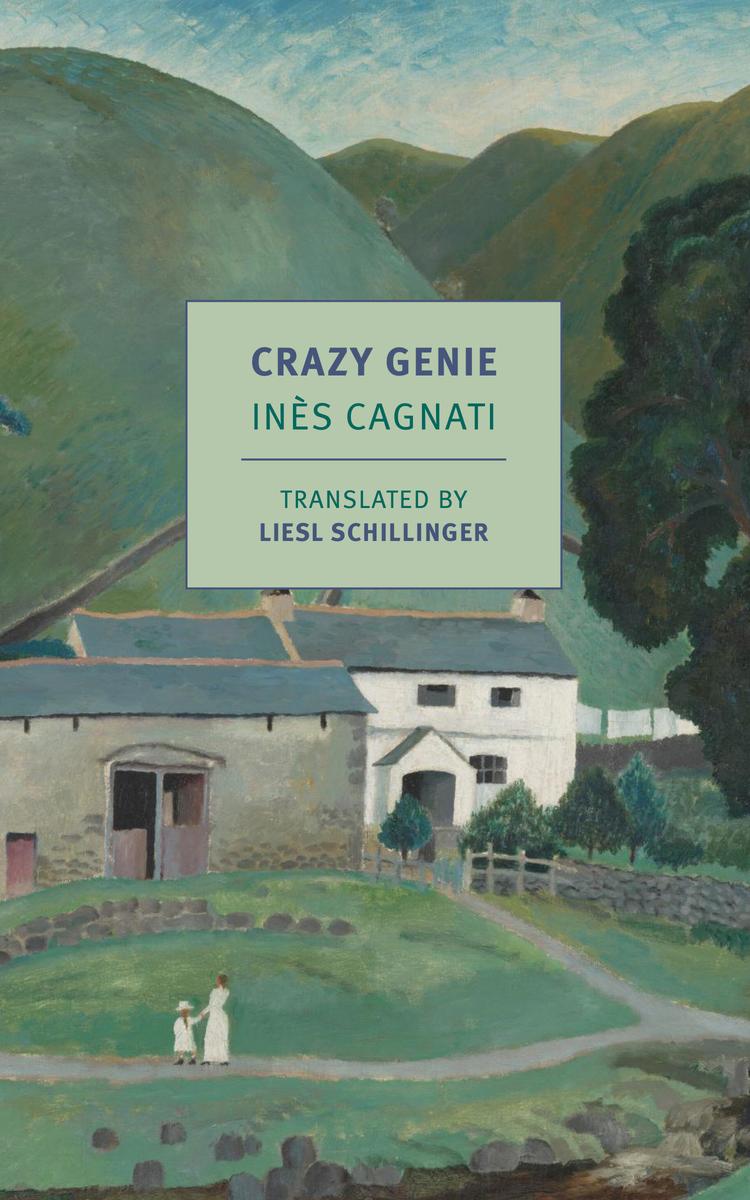
Marie lives with her mother, Genie, in a ramshackle house by a willow-lined river in rural France. Every morning, Genie walks to the neighboring farms to do what work there is to be done. When farmers and villagers greet her, she says nothing, and keeps walking. Once, she was a lighthearted girl from the best family in the valley; now they all call her “Crazy Genie.” While her mother works, Marie waits, yearning for her mother to notice her, longing for the moment when they will be back in their lonely house by the river.
Told in Marie’s ingenuous, straightforward voice, Crazy Genie is the second novel by Inès Cagnati, who grew up in poverty in rural France in the 1940s, the child of Italian immigrant agricultural workers. Rich in observation and detail, and devastating in its portrayal of a child’s unconditional love and of society’s callous prejudices, Crazy Genie, together with her first novel, Free Day, confirms Cagnati’s astonishing power as a writer.
Crazy Genie by Inès Cagnati, translated by Liesl Schillinger, was published by New York Review Books.
Click here to order this book through Albertine.

In the wake of some unfathomable war, a woman wanders the forest. She and her fellow survivors are forbidden from leaving its boundaries or pausing in their eternal march through its strange depths.
Attending a rigid French school in 1940s Casablanca, a teenage girl is barred from ever questioning the dogma she is taught to believe—her punishment for doing so will be as swift as it is shocking.
Locked in a loveless marriage in the Belgian bourgeoisie, a young woman satisfies her husband’s desires, twice-weekly, as required. She has not yet thought to pursue her own.
These novellas—the first work by Jacqueline Harpman to arrive in English in decades—reveal her incredible stylistic range and demonstrate once more her penetrating psychological insight. Here we find the origins of a singular, relentless voice.
We Were Forbidden by Jacqueline Harpman, translated by Ros Schwartz, was published by Transit Press.
Click here to order this book through Albertine.
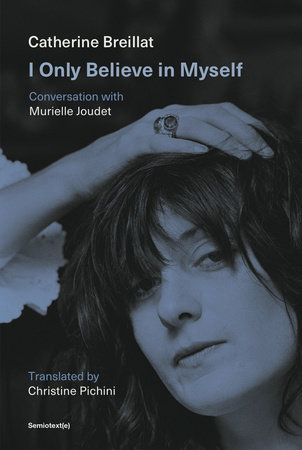
During six months between September 2022 and March 2023, the film critic Murielle Joudet interviewed Catherine Breillat for thirty hours, often following up with further discussion over the phone. Joudet and Breillat discuss each of her films in chronological order, moving freely between Breillat’s cinematic vision, her life, and the situations, artworks, and thought that have inspired her films.
I Only Believe in Myself: Conversation with Murielle Joudet by Catherine Breillat with Murielle Joudet, translated by Christine Pichini, was published by Semiotext(e).
Click here to order this book through Albertine.

In the late 1970s, Marguerite Duras embarked on an experimental journey to expand the boundaries of writing and film. For Duras, writing need not be text on a page nor cinema merely images on a screen. Six Films is the result of her efforts to redefine the two arts in order to create a hybrid work.
Taking narration, voiceovers, and dialogue from six of her films, Duras re-envisions them as extended prose poems and monologues, tangling with self-identity, personal relationships, colonialism, and expression as the celluoid images recede and the text becomes the film itself. Now available for the first time in English, Six Films is a document of an artist at the apex of her creative prowess.
Six Films by Marguerite Duras, translated by Olivia Baes and Emma Ramadan, was published by Mercurial Editons.
Click here to order this book through Albertine.
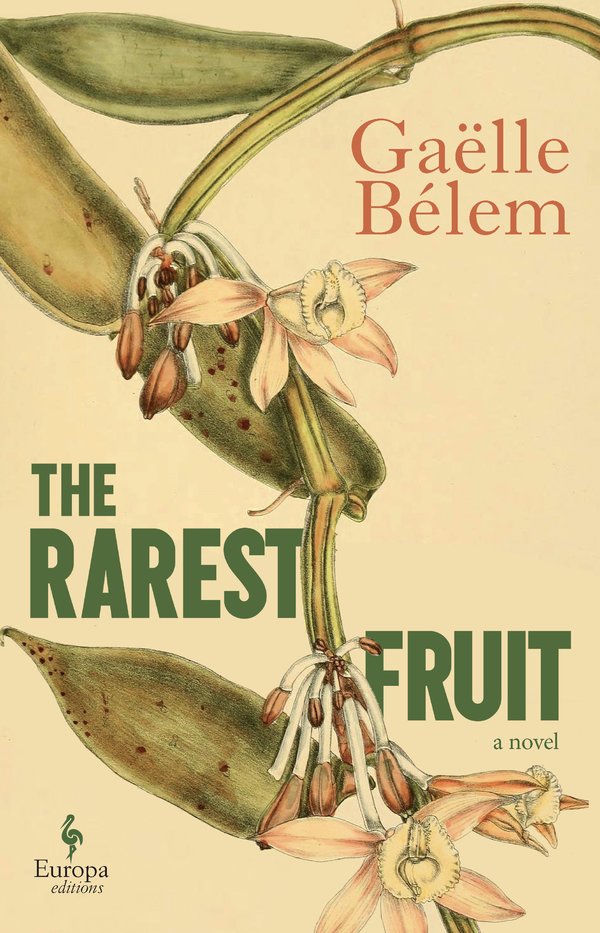
Born into slavery, orphaned at an early age, and raised by a passionate botanist on Réunion Island, Edmond Albius will defy the expectations of his time and, with his extraordinary natural talent for botany, revolutionize global culinary culture by discovering the secret life of vanilla orchids.
A novel of 19-century adventure, perseverance, a book at the intersection of science, exploration, and cuisine, The Rarest Fruit brings to light the contributions of a Black botanical innovator, who, during a time of colonial exploitation and against all odds, changed food culture forever. It is both a poignant tribute to the unsung heroes of history and a vivid portrayal of intertwined destinies shaped by a single discovery.
The Rarest Fruit by Gaëlle Bélem, translated by Hildegarde Serle, was published by Europa Editions.
Click here to order this book through Albertine.
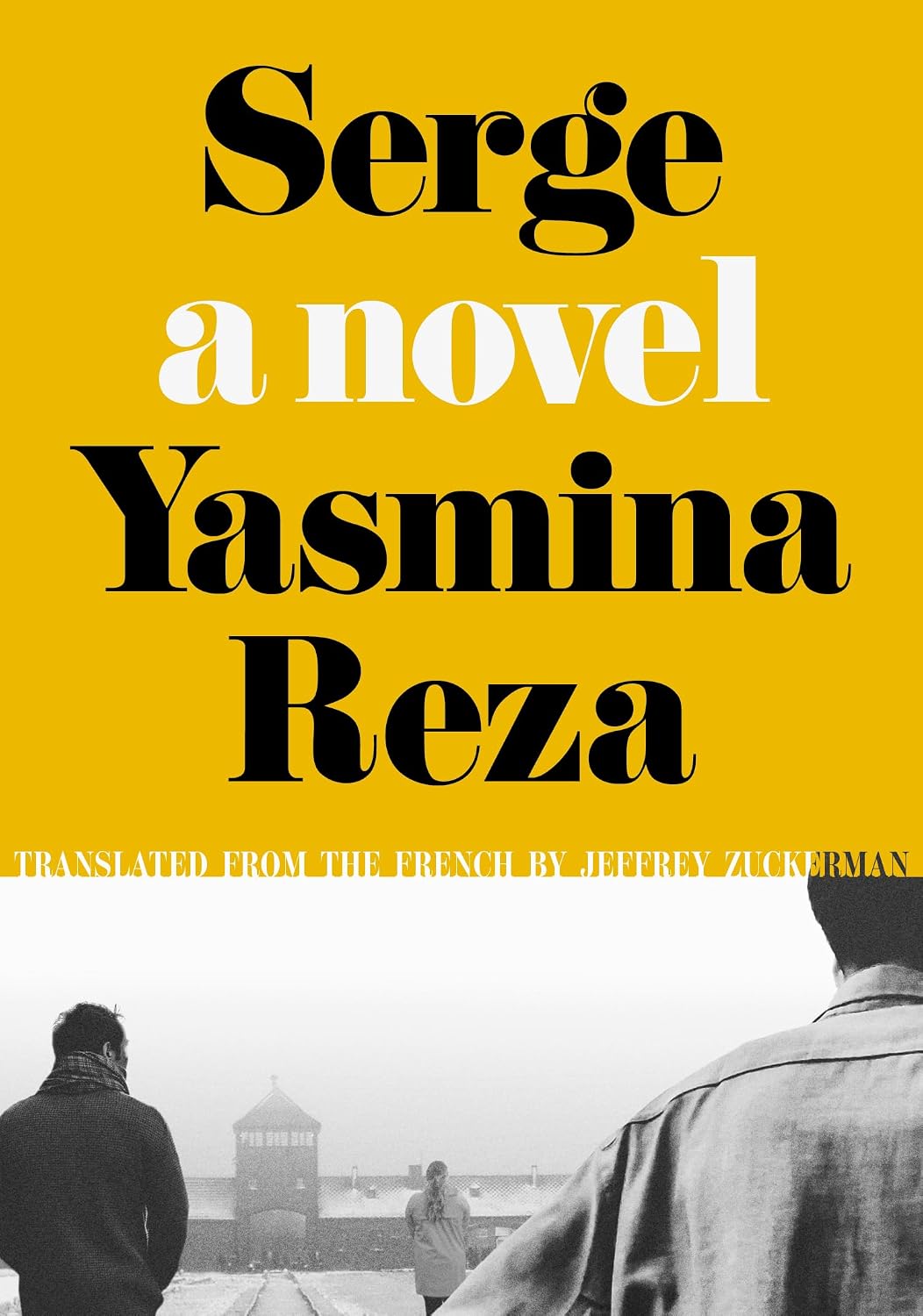
When adult siblings Serge, Jean, and Nana embark on an unexpected road trip, they take along one daughter and more than enough tangled family history. As Jean watches his older brother fall apart, he tries to hold the center, and what might have been a solemn pilgrimage into the past quickly devolves into a tragicomedy of mutual fixations, private grievances, and the limits of kept company. As reflective as it is incisive, Serge is a testament to Reza’s gift for finding light in the abyss.
Serge by Yasmina Reza, translated by Jeffrey Zuckerman, was published by Restless Books.
Click here to order this book through Albertine.
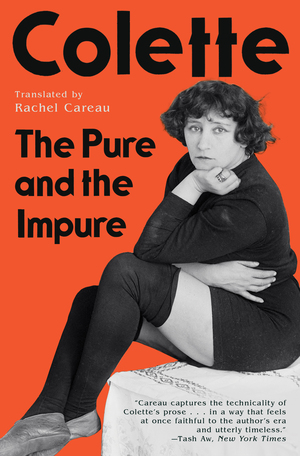
Lyrical, allusive, sometimes obscure, yet precise, The Pure and the Impure has elicited equal parts consternation and praise since its publication nearly 100 years ago.
Through strikingly vivid and evocative portraits, many of them of her friends and lovers, Colette explores varieties of sexual expression, gender identity, love and sensual pleasure. Decades ahead of its time in contemplating queerness and women’s sexuality, The Pure and the Impure provides a fascinating window into the various demimondes of the Parisian Belle Époque. At the same time, the book offers a unique portrait of a complex and often contradictory character–Colette herself.
The Pure and the Impure by Colette, translated by Rachel Careau, was published by W.W. Norton.
Click here to order this book through Albertine.